


African elephants and medicinal plants: possible self-medication documented through local ecological knowledge
Study at Mount Elgon shows: Kenyan elephants and Indigenous communities share knowledge of medicinal plants
Wild African elephants living in the Mount Elgon region of Kenya appear to seek out specific plants when apparently unwell. Local experts also reported mothers administering plant-based “medicine” to their offspring. These are the findings of a study conducted by the JRG Ethnopharmacology and Zoopharmacognosy at the Bernhard Nocht Institute for Tropical Medicine (BNITM). The study was carried out in close collaboration with the Mount Elgon Foundation (MEF), Neubrandenburg University of Applied Sciences, the East African Wild Life Society – Mount Elgon Elephant Project (EAWLS-MEEP), the National Museums of Kenya, and other local partners. It has been published in the journal Scientific Reports.

The team interviewed eight local experts who have lived and worked alongside elephants for decades and, for the first time, systematically documented which plants wild elephants appear to use for medicinal purposes. Many of these plants also play a role in Indigenous traditional medicine. Previous studies reported antibacterial, anti-inflammatory, or antiparasitic properties for some of these species.
Since the 1970s, it has been known that animals can treat themselves – for example, chimpanzees deliberately consume bitter leaves to combat intestinal parasites, and birds line their nests with anti-insecticidal plants to fumigate anaemia-causing mites. Scientists refer to this phenomenon as zoopharmacognosy.
There have already been a few studies suggesting possible self-medication in elephants, particularly Asian elephants. However, systematic investigations of African elephant species have been rare. The new BNITM study addresses this gap. Led by Dr Fabien Schultz, the team shifted the focus from zoo and laboratory studies to the natural environment of elephants on Mount Elgon, a biodiversity hotspot with exceptionally rich flora and mineral-rich cave systems.
Rather than invasively disturbing elephants in their habitat, the researchers relied on the long-term observations of people who live alongside them: wildlife scouts, a former ranger, a retired agricultural officer who grew up on Mount Elgon, and local community elders — all with more than twenty years of experience living in the area of, or working with elephant herds. In detailed guideline-based talks, so called semi-structured interviews, they described which plants elephants consume when exhibiting sickness behaviours and how local communities also use these resources in traditional medicine.
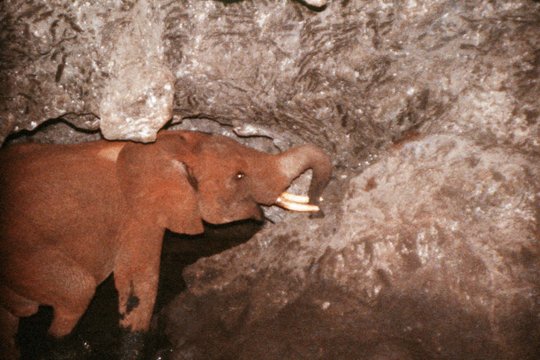
This traditional ecological knowledge of Mount Elgon’s elephants, observed by EAWLS-MEEP staff and other members of the local community, suggests that some of these behaviours may be socially transmitted across generations. MEF supports EAWLS-MEEP in protecting Mount Elgon’s endangered salt-mining elephants and has documented 55 caves used by elephants, some of which they enter up to 160 metres.
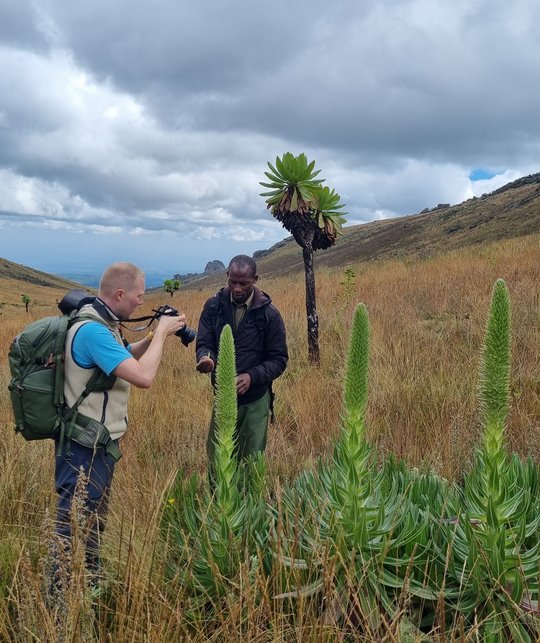
Integrating Western Science with Indigenous Knowledge
To investigate the reports scientifically, the researchers prepared herbarium specimens of all cited species, had them botanically identified at the East African Herbarium, and cross-referenced their names with international databases. They then analysed the reports using ethnobotanical metrics, examining how frequently different informants mentioned each plant, which parts humans and elephants use (such as leaves, bark, or roots) and which ailments these resources traditionally treat.
The team also reviewed scientific literature on pharmacologically studied medicinal plants to identify if any of the plants in the study from Mount Elgon have already known therapeutic properties.
In total, the eight local experts described 39 natural resources that they believe the elephants in the Mount Elgon region intentionally use: 35 plant species from 23 families and four types of soil, mineral, or clay. In 34 cases (87 per cent), these were resources also used medicinally by local people. Twenty-five of these resources were explicitly described as “medicine for elephants.”
What Elephants Eat - and Why
The researchers categorised the observed behaviors according to a five-stage framework for animal self-medication. Particularly compelling are so-called “Mode 4” cases: situations in which sick animals were perceived by informants to intentionally consume specific resources that are neither especially nutritious nor palatable, often in small amounts, at unusual times, or in distinctive ways. In such cases, local experts interpreted the behavior as an attempt to relieve a specific ailment.
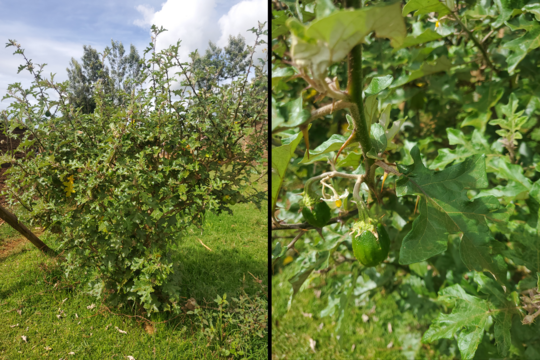
Eight plant species, including Aloe arborescens, Bersama abyssinica, and Ficus natalensis, met these stringent criteria. Several interviewees described elephants traveling long distances directly to a particular tree without feeding along the way, solely to consume its bark or leaves.
Among the most striking observations were examples of “maternal allocare,” meaning care directed towards another individual. Local experts described mother elephants administering plant material to their calves. The research team is now seeking video evidence to document this behaviour directly. Neither the exact preparation process nor a medicinal or immunising benefit has yet been established. Five resources were identified in reports of mother–calf allocare.
The well-known “salt-mining” elephant behavior in Mount Elgon’s caves was also assessed. All interviewees confirmed that elephants consume clay and mineral-rich rock in the caves and emphasised its role primarily as sources of minerals. The study supports the view that elephants eat earth and clay both to obtain minerals and to protect their digestive systems. However, the authors deliberately stop short of classifying this behavior as clear medicinal use.
A Sensitive One Health Ecosystem
“Our results show how closely the plant life of Mount Elgon is linked to the health of both elephants and people,” says Dr Fabien Schultz, head of the JRG Ethnopharmacology and Zoopharmacognosy at BNITM and lead author of the study. “Reports that elephants use some of the same plants that local communities use in traditional medicine make protecting these habitats a One Health issue. In the coming years, together with our partners, we want to investigate whether and how these behaviours are learned or socially transmitted, and which plants and locations may be particularly important to protect.”

Dr Elodie Freymann, co-corresponding author and an expert on self-medication in great apes, played a key role in designing the project and analysing the reports. She contributed her expertise on complex animal “medicinal cultures,” including studies of chimpanzees and orangutans, and helped place the Mount Elgon observations within the broader scientific literature. She adds, “Most of the time the people who live in close proximity to animals have known their secrets for generations. Our job as scientists is now to start asking the right questions.”
The study joins a growing body of research showing that self-medication in animals is not an exotic exception but a recurring pattern across the animal kingdom – from insects and birds to primates. What is new is, to our knowledge, the first systematic documentation of local experts’ accounts of a broad repertoire of possible medicinal plant use by wild African elephants, based on research at Mount Elgon. The finding that human and elephant medicinal-plant knowledge overlaps so extensively at Mount Elgon (87 per cent) also points to a shared ecological knowledge base that has developed over generations.
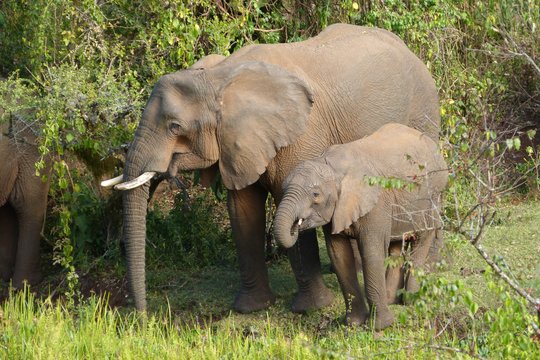
From Observation to Conservation
The findings have potential implications for wildlife conservation. African elephants are considered threatened, and habitat loss and human–wildlife conflict place enormous pressure on their populations. If elephants depend not only on food plants but also on specific medicinal plants, then every instance of deforestation represents not just a loss of food resources but potentially the loss of part of their “pharmacy.” Protecting medically relevant species and habitats therefore becomes a matter of both human and animal health.
At the same time, the study opens new avenues for ethnopharmacological research. The team specifically examined existing pharmacological studies on the most frequently mentioned species and identified overlaps among traditional uses, elephant observations, and known pharmacological effects and bioactive compounds. Such intersections could serve as starting points for more detailed laboratory investigations.
Future projects may include experimental studies of selected plants, for example by characterising their chemical constituents and testing them for antimicrobial, anti-inflammatory, or antiparasitic effects. Equally important is continued collaboration with the local Indigenous communities whose knowledge formed the foundation of the current study.
Ultimately, the researchers emphasise, the goal is not only to discover new medicines but also to expand our understanding of health through the One Health approach: the health of humans, animals, and ecosystems is inseparably interconnected.
Original Publication
Schultz, F. et al.: African elephants putatively self-medicate with medicinal plants in the Mount Elgon region, Kenya. Scientific Reports, 2026. DOI: 10.1038/s41598-026-53610-4
About the Bernhard Nocht Institute for Tropical Medicine (BNITM)
The BNITM is Germany’s largest institution for research, healthcare and teaching in the field of tropical and emerging infectious diseases. Current research priorities include malaria, haemorrhagic fever viruses, neglected tropical diseases (NTDs), immunology, epidemiology, implementation and the clinical aspects of tropical infections, as well as the mechanisms of virus transmission by mosquitoes. For handling highly pathogenic viruses and infected insects, the Institute has laboratories of the highest biosafety level (BSL-4) and a biosafety insectarium (BSL-3). In numerous countries of the Global South, the BNITM supports the development of (mobile) laboratory capacities. The BNITM’s mobile laboratories are on standby to help combat global outbreaks of highly pathogenic or highly infectious viruses. The Data Science Center has just been set up.
The BNITM is the National Reference Centre for Tropical Infectious Agents, a Consultant Laboratory for Bornaviruses, a WHO Collaborating Center for Arboviruses and Haemorrhagic Fever Viruses, a WHO Collaborating Center for Behavioural Research in Global Health (BRIGHT), and an institute of the Leibniz Association.
Downloads
Contact person
Dr Fabien Schultz
Research Group Leader
Phone : +49 40 285380-997
Email : fabien.schultz@bnitm.de
Julia Rauner
Public Relations
Phone : +49 40 285380-264
Email : presse@bnitm.de
Further information