


FAQ on the Chikungunya virus
Disclaimer
The contents of this website are for general information purposes only and do not constitute medical advice, diagnosis or treatment. They are not a substitute for individual consultation with a qualified medical professional.
No guarantee is given for the accuracy, completeness or timeliness of the information provided. Use of the content is at your own risk. If you have any health questions or complaints, please always consult a doctor or other qualified professional.
1. What is chikungunya?
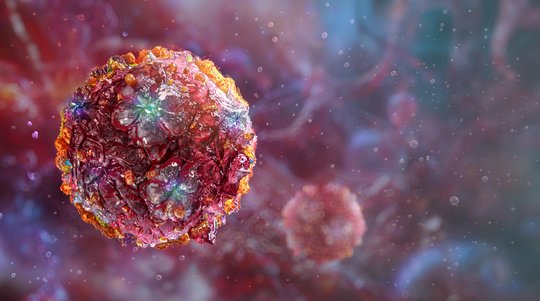
Chikungunya is a viral disease caused by the chikungunya virus (CHIKV), an alphavirus of the Togaviridae family.
2. How is chikungunya transmitted?
Chikungunya is transmitted by infected mosquitoes, primarily Aedes aegypti and Aedes albopictus (Asian tiger mosquito). When a mosquito bites an infected person, it can acquire the virus and later transmit it to another person.
Chikungunya is not transmitted directly from person to person (not through contact, air or food). In rare cases, however, infected mothers can transmit the virus to their newborns shortly before or during birth.
3. Where does chikungunya occur?
Chikungunya is widespread in many tropical and subtropical regions of the world, particularly in parts of Africa, Asia and Latin America. In recent years, however, the virus has also been detected in Europe. This is due to the spread of the Asian tiger mosquito (Aedes albopictus), which is now established in several southern European countries. If travellers bring the virus with them and this mosquito is present locally, isolated cases of local infection may occur.
- Since 2007, there have been several small local outbreaks, mainly in Italy and France.
- In 2023, over 100 locally transmitted cases were reported in the EU, mainly in France.
- In 2025, autochthonous, i.e. locally acquired, cases were again confirmed there, mainly in the Provence-Alpes-Côte d'Azur and Occitanie regions.
Advice for travellers: Anyone travelling to southern Europe should find out in advance about current mosquito activity, possible chikungunya outbreaks and recommended protective measures.
4. What are the symptoms of chikungunya?
Symptoms typically begin 4 to 8 days after the bite (range 2 to 12 days).
The main symptoms are:
- sudden onset of fever
- severe joint pain (arthralgia)
- muscle pain
- headache
- skin rash
- fatigue/weakness
- nausea
In most patients, the symptoms improve within a few days to weeks. However, joint pain or joint inflammation can persist for months or even years (chronic form). Severe cases are rare and mainly affect infants, elderly people or people with pre-existing conditions. In isolated cases, cardiac, neurological or organ involvement has been reported.
5. How is chikungunya diagnosed?
In the early phase (first week), the virus can be detected directly in the blood, e.g. by RT-PCR or virus isolation. After the first week, antibody tests (IgM/IgG) can be used to detect infection. Since the symptoms are similar to those of other mosquito-borne viral diseases (e.g. dengue or Zika), clinical examination alone is often not sufficient. Laboratory tests are therefore important. Cross-reactions are rare, but may occur with closely related viruses such as Mayaro or O'nyong-nyong. Additional special tests may therefore be necessary in certain regions.
6. How is chikungunya treated?
There is no specific antiviral therapy. Treatment is symptomatic: fever reduction, painkillers (e.g. paracetamol), rest, adequate fluid intake.
Due to the potential risk of bleeding, non-steroidal (cortisone-free) anti-inflammatory drugs (NSAIDs) such as aspirin, ibuprofen and diclofenac should be avoided as long as a dengue infection cannot be ruled out.
If severe joint pain persists, medical attention should be sought without delay. If the symptoms persist for longer than 3 months, anti-inflammatory medication or further therapeutic measures may be considered. There are currently no binding guidelines on this.
7. Is there a vaccine against chikungunya?
Yes. Two vaccines against chikungunya are now approved in the EU (both for people aged 12 and above). They are recommended for people at increased risk, such as those who live in regions with repeated outbreaks or who are particularly at risk due to their occupation.
IXCHIQ – live vaccine (attenuated viruses)
Type: Live attenuated vaccine (contains highly attenuated but replicable viruses).
How it works: The virus can replicate easily in the body, triggering a very strong immune response.
Advantages: Can provide long-lasting protection.
Special features/restrictions: Can rarely cause serious side effects, especially in older adults or people with weakened immune systems.
The EMA only recommends it if there is a high risk of infection and after individual risk assessment.
Vimkunya – VLP vaccine (virus components)
Type: Virus-like particle (VLP) vaccine (contains no live or replicating viruses).
How it works: Contains only virus components that ‘train’ the immune system without real viruses becoming active in the body.
Advantages: Very good safety profile. Also suitable for people for whom live vaccines would be risky (e.g. older people, immunocompromised individuals).
8. How can you protect yourself against chikungunya?
- Vaccination: Vaccines approved in the EU are available for people aged 12 and over and are particularly recommended for travellers or people in risk areas.
- Protect yourself against mosquito bites: Apply insect repellent (DEET, IR3535, picaridin) to your skin and clothing.
- Wear long-sleeved clothing and long trousers, especially during the day when Aedes mosquitoes are active.
- Use mosquito nets and insect screens on windows and doors.
- Eliminate mosquito breeding sites: remove or cover standing water in containers, flower pots, tyres, etc.
- People with acute infection should avoid mosquito exposure during the first week, as mosquitoes could otherwise become infected and transmit the virus further.
- In outbreak situations, authorities may take additional measures, such as spraying against adult mosquitoes (fogging) or indoor treatment with insecticides (indoor residual spraying).
Further information:
World Health Organisation (WHO)
European Centre for Disease Prevention and Control (ECDC)
Kontakt
- Dr Rosa Isela Gálvez
- Arbeitsgruppe Protozoen-Immunologie
- phone: +49 40 285380-857
- email: rosa.galvez@bnitm.de
- BNITM Press
- phone: +49 40 285380-264/269
- email: presse@bnitm.de
- The Laboratory diagnostics|Consultation for physicians
- Advice on the diagnostic procedure
- phone: +49 40 285380-211
- fax: +49 40 285380-252
- email: labordiagnostik@bnitm.de