


Implementation
How do interventions work in practice?
In this section, interdisciplinary projects with economic and social science approaches are carried out to empirically analyse and optimise intervention measures to combat infectious diseases in LMICs.
Clicking on the research groups will take you to the personal websites of our research groups. There you will find e.g. the contact of the respective group leader as well as their research projects and staff.
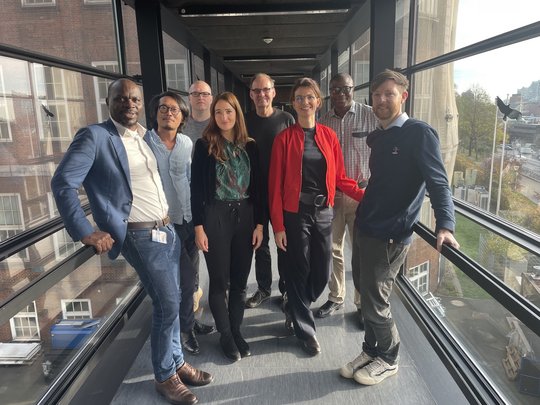
Question: During the COVID-19 pandemic, you became known for the COSMO study at the University of Erfurt, which examined the attitudes and behaviour of Germans. At the Bernhard Nocht Institute for Tropical Medicine, you and your working group are now expanding the focus to the Global South and the whole world, to planetary health. What is your overarching research goal?
Betsch: We are interested in climate-healthy behaviour. That is a very broad umbrella under which many topics fit. Because wherever we intervene in the environment, this has an impact on our health. This includes pandemics, climate-friendly nutrition, the use of antibiotics and much more. We want to understand behaviour in order to consider how we can change behaviour towards more climate-friendly behaviour.
Question: Why at the Bernhard Nocht Institute for Tropical Medicine?
Betsch: Firstly, the problems and challenges we face here must always be viewed globally. It's not enough to fight a pandemic in one country or only do climate protection in one country. On the other hand, we have fantastic opportunities here to work with partners in all parts of the world. For example, we are trying to implement a study on climate-friendly behaviour that we have set up in Germany with partners from other countries in order to understand: What prevents people in different countries from adopting climate-healthy behaviour?
Question: You are referring to the Planetary Health Action Survey, the PACE study. What exactly are you analysing?
Betsch: For example, we are looking at: What climate-friendly behaviour do people already show; i.e. eating behaviour, living behaviour; what political measures do they accept, do they want to participate politically for more climate protection, and what factors influence this? The next step is to consider: Where could we start with communication in order to better explain climate-friendly behaviour, does this also result in greater acceptance of political measures? How can people be empowered to adopt climate-friendly behaviour? And how can this be made more attractive?
Question: Your work also focuses on antimicrobial resistance and vaccination behaviour. The pandemic has shown that fears are similar internationally. What cultural differences have you found?
Betsch: Vaccination and antibiotic use have interesting similarities, because behaviour has consequences for others. If I get vaccinated, most vaccinations have a positive effect on others. With antibiotics, it's the other way round: if I take antibiotics that I don't absolutely need, then I contribute to the development of resistance. This means that my behaviour has a negative effect on others. We are interested in how our behaviour interacts with the behaviour of others and how this influences our decisions.
In our culture, for example, people are more willing to be vaccinated if they know that they are helping other people. But we have data from Asia that shows that vaccination is already seen as a pro-social act there and that additional communication has no extra benefit because people are more willing to be vaccinated anyway. This shows that you have to go to other cultures in order to understand where certain communication measures can be effective and where they are superfluous and perhaps another approach is necessary.
Question: Two of your research projects are taking place in Africa, in Zanzibar/Tanzania and in Gabon. What are you researching there?
Betsch: In Zanzibar, we are developing a questionnaire tool to record the use of antibiotics: How and when do people who work in the healthcare sector prescribe antibiotics, how do they dispense them, how do patients handle them. Many also have animals; chickens, for example, where antibiotics are also frequently used. We try to understand: What do people know about antibiotics, is there an awareness of the resistance issue? Zanzibar has developed monitoring targets for antibiotics together with the WHO in the AMR plan, which also include knowledge and behaviour. We want to contribute to this with our resources.
In Gabon, the focus is on vaccination. There, we want to replicate a study that was conducted in other cultural contexts, in America. We want to challenge supposedly established knowledge from health communication by testing different communication techniques in other cultural contexts with short explanatory films about vaccinations. For example, does emphasising risks or correcting myths have the same effect as in America? We want to test the idea that what we know about human behaviour applies everywhere.
Question: Sounds time-consuming.
Betsch: Yes, first we have to establish partnerships, submit ethics applications in other countries in other languages, produce culturally adapted material. That is a very interesting challenge. We can't repeat one-to-one the studies that took place in an American context. For example, how do you make a good film that we can use both in America and in Germany as well as in Gabon that basically explains the same thing so that we can make a really good comparison?
Question: What are the differences in dealing with the media?
Betsch: Communication actually works via other channels. But we are already in the area of implementation. We have to ask this question when we know: How do we get the message out? Now we first want to understand which message is actually received and how? What does it do to people's minds, feelings and behaviour? And then comes the media question. But when we were there, it was already very clear that the large billboards in the cities, for example, are used very differently than here.
Question: In recent decades, behavioural research has focused primarily on Western democracies: the so-called WEIRD countries (Western Educated Industrialised Rich Democratic). What consequences did this one-sided focus have, and what do you unveal now?
Betsch: We can't say for sure yet. 70 per cent of all research in psychology comes from these WEIRD countries. We talk a lot in psychology about generalising theories. That we have an idea of how "the human being" works on the basis of research... It is often simply not taken into account that the contexts in which research takes place are very specific. That's why we want to put what we know from health communication to the test again and examine it in other contexts, where social relationships perhaps have a different meaning or other media are used or behaviour takes place differently than in our contexts. Of course, others are also working on this, but we want to contribute to this. We have really fantastic working conditions here at the BNITM because the institute has many great relationships with fantastic partner countries and researchers. We benefit greatly from this and hope to make a contribution that perhaps raises awareness of the fact that we need to look in both directions and bring together both.
Question: Why do you have pictures of the Biennale on your website?
Betsch: (Laughs) I love Venice. I took the pictures at the 2021 Architecture Biennale. Many topics dealt with planetary health issues: how do we intervene on the earth, what do we use for building, why don't we actually implement what we know? We have an implementation problem in Germany, as we have also seen during the pandemic. We know a lot about health communication, but a lot of it was not implemented during the pandemic: how to do health communication, how to explain things well, how to get knowledge to the end users. I'm very concerned about that and I'm committed to it. And some of the pictures I was able to take there symbolise that for me.
Question: Health is a prerequisite for people and societies to be able to develop, including economically. One of the questions that the Health Economics working group is investigating is how healthcare systems can be improved in such a way that the overall "welfare" in a country improves, as the economic term goes. Jan Priebe, how can this be achieved?
Priebe: Our goal is to make societies and people in general better off, that is the credo of economics. For example, we consider which structures and incentive systems make sense for a healthcare system to function optimally. In doing so, we take into account that there are things that look good on paper but are often not adequately implemented in practice. A classic example: mosquito nets. They have been proven to help against malaria mosquitoes. However, they are often not hung up, for example because there are rumours that the insecticides on the net make people infertile. Or certain guidelines are not adhered to in clinics. That's where we look: What information and incentive structures are in place? What are the interests of the stakeholders involved, the doctors, the nursing staff, the pharmaceutical companies? What incentive do they have to contribute to the public good of health? And then we try to design rules and incentives in such a way that we achieve the best social results for the population.
Question: What could be sensible incentives?
Priebe: Non-monetary incentives could include, for example, the requirement that doctors obtain a second opinion in certain cases or go through a checklist before making medical decisions. This can help to minimise medical errors. On the other hand, this can cause considerable costs and additional work. We try to take all these aspects into account as a whole in order to then make recommendations as to which processes and incentive structures are socially optimal.
Question: Can you illustrate this with a specific project?
Priebe: We have a healthcare project in Indonesia, for example. It's about the question of how to motivate nursing staff and medical personnel to work in health centres in rural areas. The lack of doctors in rural areas is a problem in many countries, including Germany. There are many reasons for this: poorer earning opportunities, private reasons, many doctors are usually trained in cities and continue to live locally.
We are looking at the extent to which financial and non-financial incentives can lead to doctors working more in rural areas and how these incentives should be organised. An important point here is that although there are formally enough doctors available, i.e. they are regularly paid by the state, they are de facto not or hardly ever at their rural workplace. In some of these cases, one can speak of state failure, corruption or inefficiency. In cooperation with the Indonesian government, we are testing the extent to which local and municipal citizen participation in the health sector can lead to an increase in motivation and a reduction in unexcused absenteeism among doctors in rural areas. The project itself is supported by the World Bank.
Question: You are also conducting research projects on vaccination scepticism in Indonesia and Germany. Among other things, this also involves the role of religion and health communication. What exactly are you researching there?
Priebe: All over the world, trust in state institutions plays a central role in the individual decision to utilise public health services such as vaccinations. If trust in state institutions is disturbed, the question arises as to what extent other actors can take on the role of the state. In many countries around the world, religious actors are held in much higher esteem than secondary state actors. In these countries, it can make sense to involve religious actors in public health issues. This is typically the case with large-scale health initiatives such as immunisation campaigns or parent-child issues. In Islamic countries, religious institutions also issue statements on which medicines or vaccines they consider to be halal or haram, i.e. pure or impure. In Indonesia, for example, one of the major Islamic councils of scholars declared the COVID-19 vaccine from Astra-Zeneca to be haram. As a result, at the beginning of the COVID-19 pandemic, only Chinese vaccines could be administered in many provinces, while the Astra-Zeneca vaccine was sometimes cancelled or sent exclusively to Christian provinces.
Another example concerns the role of culture and religion in Germany. Similar to Indonesia, there are many people for whom religious recommendations on vaccines are extremely important. Therefore, for the COVID-19 vaccination campaigns, imams were also asked to promote the vaccination to allay fears.
In our research, we are trying to understand how best to design and implement health initiatives that take into account psychological and religious factors.
Question: Another project is about the spread of fake news on social media. What role does this play for health?
Priebe: As I said, economics aims to improve welfare, and the fact that people inform themselves and how they do so plays a major role. They are taking in more and more information and also more and more disinformation through social media. There are many studies that look at how misinformation from social media such as Facebook, Instagram or TikTok is spread, how it can be prevented or at least reduced and how news can be designed so that people are more critical.
We are conducting a methodological study in which we are looking at the extent to which false reports about infertility caused by vaccinations are shared on social media in six African countries. Fear of infertility is one of the main reasons for vaccine hesitancy or scepticism in many countries. In our view, previous studies on this topic have two major methodological weaknesses:
They only measure vaccination attitudes. However, these often only correlate very weakly with vaccination decisions. In addition, they usually ask study participants to share posts on social media that do not correspond to their other "surfing behaviour". For example, the topic, news source, visualisation or choice of words of the message do not suit the person in question. However, everyone has their own way of searching for, reading and, if necessary, forwarding messages via social media.
Our innovation is to map this selection process of articles and news in the experiment: Which pages am I actually on before I decide whether to read something and whether to pass it on. This also has an influence on whether it makes sense to show people warning messages, for example, that the article may not contain accurate information.
Question: Implementation research has been added to an institute that is very much characterised by the natural sciences and medicine. What opportunities do you have here that you don't have elsewhere?
Priebe: On the one hand, the BNITM's international research networks are important for us, especially in the Global South. But not only, because our discipline has also been working a lot in low and middle income countries for decades. What is particularly exciting for us is that we are now also working with experts who collect so-called 'hard' health indicators. We no longer have to rely on partly subjective indicators; for example, whether patients say that they feel better or whether doctors claim that they have less workload. We can now see this in the blood, in the smear test, in the reduced burden of parasites or mosquitoes in a region. It is very special for us to have access to people who are world-class in this field.
“You cannot simply reset the system to zero”
A conversation about Lassa fever, rodent control and immunity in West Africa
How can a virus be contained when it is deeply embedded in ecological and social structures? In this conversation, implementation scientist and Head of the Zoonoses Control working group Elisabeth Fichet-Calvet reflects on her long-standing research in West Africa. The discussion focuses on rodents as reservoirs, on interventions and their limits, and on immunity. It also addresses why measures that appear logical at first glance can, under certain conditions, even prove counterproductive.
Dr Fichet-Calvet, you changed the focus of your scientific career relatively late. How did that come about?
Fichet-Calvet: For many years, I worked exclusively in ecological field research, spending time outdoors, trapping animals, collecting data and analysing it afterwards. Laboratory work was not part of my profile for a long time. It was only in 2010 that I began to learn molecular techniques, such as PCR. I was around 50 at the time and had never used a pipette before. It was a complete career change for me.
Question: What prompted this step?
Fichet-Calvet: I wanted to understand what happens to the pathogens, not only to the animals. We had a very good collaboration: I came from the field, my colleague Professor Stephan Günther from the laboratory. That was complementary. Despite my age, I was accepted as a senior researcher and received a fellowship. That made this transition possible. I have never regretted it, even though it means constantly travelling between France, Germany and West Africa.
Question: You have been researching Lassa fever in West Africa for many years. What particularly interests you about this virus?
Fichet-Calvet: I have worked for many years in Guinea, Sierra Leone and other countries in the region. The central question has always been how the virus circulates between reservoir and humans, and what role ecological conditions and human behaviour play in this process.
Question: In one of your key studies (LINK), you investigated whether targeted rodent control can reduce the circulation of the Lassa virus. What did the study design look like?
Fichet-Calvet: In Guinea, we trapped rodents in several villages and compared the effects of different control strategies, chemical rodenticides and snap traps. We treated three villages and used three as controls. The villages were deliberately chosen to be very similar, with comparable landscapes, population sizes and ecological conditions. We wanted to avoid comparing urban and rural settings. Ecologically, the villages were meant to be as homogeneous as possible.
Question: What do we generally observe in rodent populations in these regions?
Fichet-Calvet: If you set 100 traps for three nights, you catch about 40 animals on average. That is what we call trapping success. After a control intervention, the population initially declines sharply. However, this effect does not last.
Question: Why is that?
Fichet-Calvet: The main reason is the extraordinary reproductive capacity of Mastomys mice, the most important reservoir of the Lassa virus. A female produces on average around nine pups per litter, roughly every two months. In addition, these animals have an exceptionally high number of nipples, up to 20 or more. This biology explains why populations recover so quickly.
Question: You have also worked extensively with modelling approaches. What do these show over longer time periods?
Fichet-Calvet: The models show very clearly that a control efficacy of around 80 per cent, which is what we often achieve, is not sufficient. To really interrupt virus circulation, population reductions of at least 90 per cent would be required, sustained over several years. If you remain below that threshold, you can repeat the measures for ten years without ever achieving elimination.
Question: Are there alternatives to intermittent control measures?
Fichet-Calvet: Yes. We have also modelled what happens when traps are used continuously and when efforts are made to permanently prevent animals from entering houses. In theory, effects can be achieved with lower reduction rates, but only at the cost of very high organisational and social effort. This requires sustained engagement from the population.
Question: Acceptance of such measures is a recurring theme in your work.
Fichet-Calvet: Absolutely. Acceptance is crucial. Chemical control has been poorly accepted in several studies. The animals die in their burrows, they are not visible, there is an unpleasant smell, and people perceive this as ineffective. Snap traps, by contrast, were viewed positively because the results are visible. Acceptance is not a side issue; it is part of effectiveness.
Question: You also examine cultural practices related to rodents. What role does this play?
Fichet-Calvet: They are very important. In many regions, catching and eating rodents is deeply rooted culturally, especially among children. It is part of socialisation and identity. Children go to the fields, catch mice and bring them home as trophies. This is linked to nutrition, crop protection, peer pressure and everyday routines.
Question: What do people know about the link between rodents and Lassa fever?
Fichet-Calvet: Surprisingly little in many areas. Awareness is somewhat higher in Sierra Leone, but very low in Upper Guinea. At the same time, we see very high seroprevalence rates there. Many people have been exposed since childhood and have developed antibodies.
Question: This brings us to another major focus of your research: immunity.
Fichet-Calvet: At first glance, this can seem counterintuitive. In Guinea, we observe seroprevalence rates of up to 80 or 85 per cent in the human population, yet there are very few acute cases of Lassa fever. In Sierra Leone, seroprevalence is lower, but acute disease occurs much more frequently. This initially appears paradoxical.
Question: How do you explain this difference?
Fichet-Calvet: It probably has less to do with the virus itself than with immunity. People who are exposed early and repeatedly develop a certain level of protection. Immunologically naive individuals, for example people from cities or newcomers to rural areas, are more likely to develop severe disease. We see similar patterns in other viral infections.
Question: What role does mobility play in this context?
Fichet-Calvet: An increasing one. Mobility, urbanisation and also human-to-human transmission can alter these systems. We know that antibodies can persist for several years, while neutralising antibodies tend to be shorter-lived. How stable this protection is in the long term is not yet fully understood.
Question: What does this mean for public health overall?
Fichet-Calvet: It means that simple solutions do not work. “Eliminate rodents and you eliminate the virus” is too simplistic. In certain systems, radical reduction of the reservoir can disrupt an existing balance and create new risks.
Question: What would be more appropriate instead?
Fichet-Calvet: Context-specific strategies: education, protection of particularly vulnerable groups, realistic assessments of interventions and respect for local practices. You cannot simply reset such systems to zero without creating new risks.