


ERC Consolidator Grant for BNITM Junior Research Group Leader Christine Hopp
How malaria shapes the immune system – and why this could help with autoimmune diseases
Immunologist Dr Christine Hopp has been awarded a Consolidator Grant by the European Research Council (ERC). This prestigious funding, worth around two million euros over five years, will enable her to lead an interdisciplinary research project investigating the impact of malaria on the immune system. The aim is to lay the groundwork for both improved malaria vaccines and new therapies for autoimmune diseases.

Autoimmunity protects against malaria – it sounds paradoxical, but this is the starting point of the ambitious research project AUTOIMMPRINT. Autoimmunity means that the immune system turns against the body’s own structures. Christine Hopp aims to understand how this reaction may actually help to fight off the malaria parasite. Her hypothesis is that a certain level of controlled autoimmunity might be necessary to build effective immunity against malaria.
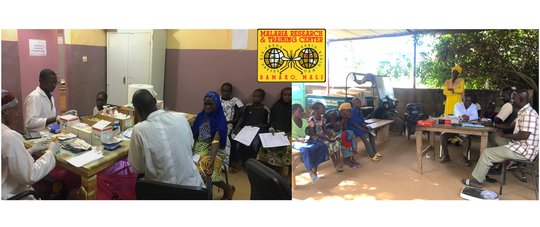
The project combines clinical field research in Mali and Ghana with state-of-the-art laboratory methods for analysing the immune system. The team compares autoantibodies and autoreactive B cells in people from malaria-endemic regions with samples from patients with autoimmune diseases such as lupus. Autoantibodies are defensive molecules that mistakenly target the body itself, while autoreactive B cells are specialised immune cells that can produce such antibodies.
The direct comparison is designed to reveal why autoimmunity protects in some contexts and causes harm in others. To complement this, the researchers use animal models to better understand how the immune system is regulated during chronic malaria infections and how this regulation may help prevent autoimmunity – knowledge that could lead to new therapeutic strategies for autoimmune diseases.
Molecular memory shaped by evolution
Christine Hopp is also investigating whether certain autoimmune reactions may have proved advantageous over the course of evolution by helping to fight off deadly infections such as malaria. This evolutionary shaping of the immune system could explain why it takes years to build natural immunity against malaria – whether through infection or vaccination. Mechanisms that usually prevent autoimmune responses may also hinder the development of strong immune protection against the parasite and complicate vaccine development. Hopp is also interested in how chronic malaria infections regulate the immune system in a way that appears to protect against autoimmune diseases. AUTOIMMPRINT aims to understand these processes at the molecular and cellular level in order to one day deliberately influence them – with the goal of improving both malaria vaccines and treatments for autoimmune conditions.
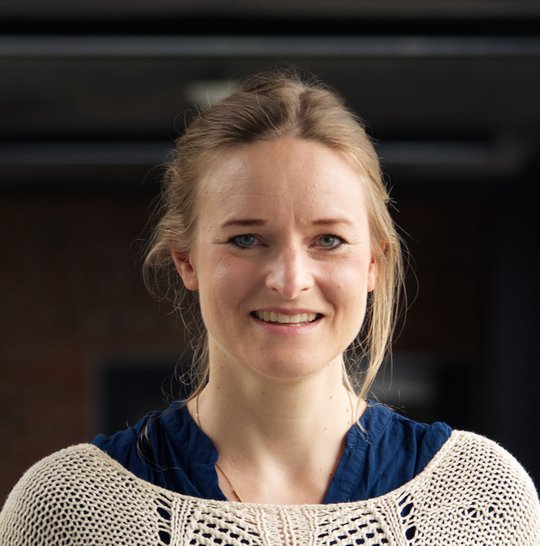
"This is a great success," says Professor Dr Jürgen May, Chair of the BNITM Board. "Christine Hopp has developed bold, innovative concepts that link fundamental research with practical goals. She has already convinced major funders such as the German Research Foundation (DFG) and the German Centre for Infection Research (DZIF). This ERC Consolidator Grant confirms our decision to have established a junior research group for her at BNITM. I wish her every success with AUTOIMMPRINT."
Expanding the team and international networking
The ERC Consolidator Grant will allow Christine Hopp to expand her highly specialised research group at BNITM and push forward with her research. She also plans to initiate an international conference to bring together researchers from the fields of infection and autoimmunity – two areas that, in her view, should no longer be studied in isolation.
Background
ERC Consolidator Grants are among the most prestigious individual funding schemes in Europe. They support researchers seeking to establish or expand their own research agenda. Christine Hopp’s proposal was ranked among the top projects in the highly competitive LS6 panel for life sciences. AUTOIMMPRINT will be conducted at BNITM, which offers the ideal infrastructure and partnerships for the project – including long-standing collaborations in Mali and Ghana and excellent immunological expertise.
To the press release of the European Research Council:
erc.europa.eu/news-events/news/erc-2025-consolidator-grants-results
About the Bernhard Nocht Institute for Tropical Medicine (BNITM)
The Bernhard Nocht Institute for Tropical Medicine (BNITM) is Germany's largest institution for research, care and teaching in the field of tropical and emerging infectious diseases. Current areas of focus include malaria, haemorrhagic fever viruses, neglected tropical diseases (NTDs), immunology, epidemiology, implementation and clinical care for tropical infections, and the mechanisms of virus transmission by mosquitoes. The institute has several high-security laboratories, including a biosafety level 4 (BSL-4) laboratory and several level 3 (BSL-3) laboratories, including a BSL-3 insectarium for handling highly pathogenic viruses and infected insects. The Data Science Centre has just been newly established. The BNITM supports the development of laboratory capacities, including mobile laboratories, in numerous countries worldwide, particularly in the Global South.
Downloads
Contact person
Dr Christine Hopp
Junior Research Group Leader
Phone : +49 40 285380-861
Email : christine.hopp@bnitm.de
Julia Rauner
Public Relations
Phone : +49 40 285380-264
Email : presse@bnitm.de