


Over one million euros for BNITM biosafety projects
Whether in laboratories or in the field, the responsible handling of pathogens is a global task. Biological safety (biosafety) and protective measures (biosecurity) are therefore important building blocks for international stability and health protection. The laboratory group led by Prof. Dr. Petra Emmerich and, in part, the working group led by Dr. Dániel Cadar at the Bernhard Nocht Institute for Tropical Medicine (BNITM) have once again received nearly 1.2 million euros from the Federal Foreign Office for security-related projects in Ukraine, the Republic of Moldova and the Western Balkans. The aim was to improve regional diagnostics of highly contagious viruses in the long term and to strengthen the biosecurity capabilities of local laboratories.

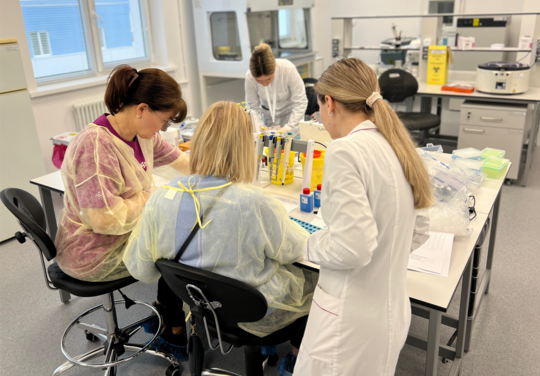
The working principle of the BNITM scientists was the same in all three countries: together with local partner laboratories, they developed serological and molecular methods for the reliable detection of highly pathogenic viruses such as Crimean-Congo haemorrhagic fever virus (CCHFV), hantaviruses and mpox. At the same time, they imparted practical knowledge on biosafety and biosecurity. This included the proper handling of infectious sample material, safe working practices and protection against the misuse of biological agents in the laboratory, but also during transport from the hospital to the laboratory.
In the Western Balkans project, for example, institutions from Albania, Kosovo, North Macedonia and Serbia worked closely together. In the summer of 2025, the partners met in Skopje to exchange experiences and jointly train laboratory methods. What made this special was that all four countries sat down at the same table despite sometimes difficult political relations – united in their goal of better equipping the region to combat abuse.
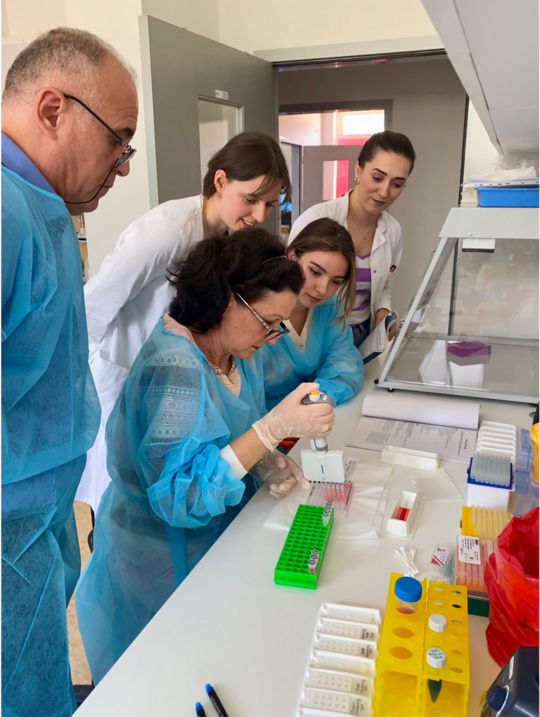
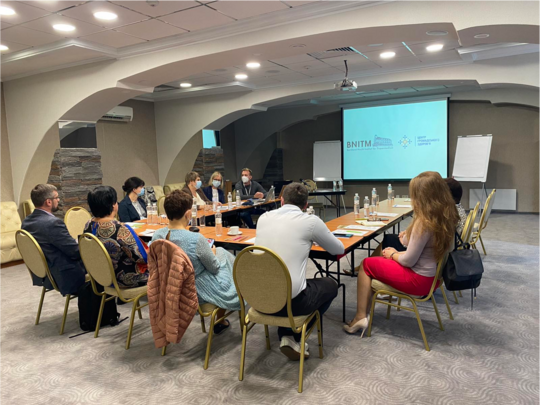
In Ukraine, too, the focus was on promoting virological diagnostics. In addition to training courses for laboratory staff at the National Institute of Health in Kyiv, training courses on biosafety issues were also held for hospital staff. Cooperation with the regional laboratories in Kharkiv, Odessa and Lviv was strengthened. In addition, sustainable structures were established for the public health laboratory in Kyiv and the associated regional laboratories.
The BNITM partners pursued a similar goal in the Moldova project. Here, they focused on further developing diagnostics for dangerous pathogens such as hantaviruses and CCHFV. To this end, they offered targeted training courses and jointly tested new methods for reliable laboratory diagnosis. For the first time, a seroprevalence study was also conducted there, in which researchers investigated whether antibodies against highly pathogenic viruses were present in the population – an important data basis that had previously been lacking. In neighbouring Ukraine, BNITM staff had already carried out a similar study between 2017 and 2024. Further seroprevalence studies have also been conducted in Albania and North Macedonia over the past two years.
The Foreign Office retroactively increased the total funding for the three projects at the end of the process. It now amounts to around 1.2 million euros for the years 2024 and 2025.
The Foreign Office provided comprehensive support for the projects, including briefings by the country departments on the political situation and close coordination with the German embassies and the relevant ministries in the partner countries. ‘The existing political differences within the region were hardly noticeable in the scientific exchange,’ sums up project coordinator Prof. Dr. Petra Emmerich. ‘All participants consistently pursued the common goal of sustainably strengthening biosecurity in the entire region. The successes, in particular the significant reduction in CCHF virus infections in Kosovo, are the result of close cooperation between ministries, laboratories and the population.’
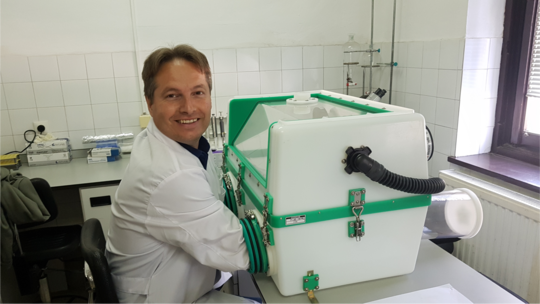
The project partner in Kosovo, Prof. Dr. vet. med. Kurtesh Sherifi from the University of Prishtina: “The Federal Foreign Office’s biosecurity programme was one of the most efficient and significant projects in my scientific career to date. It was characterised by intensive and dedicated work, excellent interpersonal cooperation and measurable success – in particular the decline in CCHFV cases between 2013 and 2025. On behalf of the Republic of Kosovo, we would like to express our sincere thanks!”
Dr Iryna Demchyshyna, Head of Virology and Deputy Head of the Public Health Centre of Ukraine (PHCU): "The joint training courses funded by the Federal Foreign Office have deepened our understanding of biosafety – a crucial aspect in dealing with dangerous pathogens. Thanks to this cooperation, we have improved laboratory diagnostics in Ukraine and introduced modern working methods. We are very grateful for this long-standing and mutually beneficial partnership.”
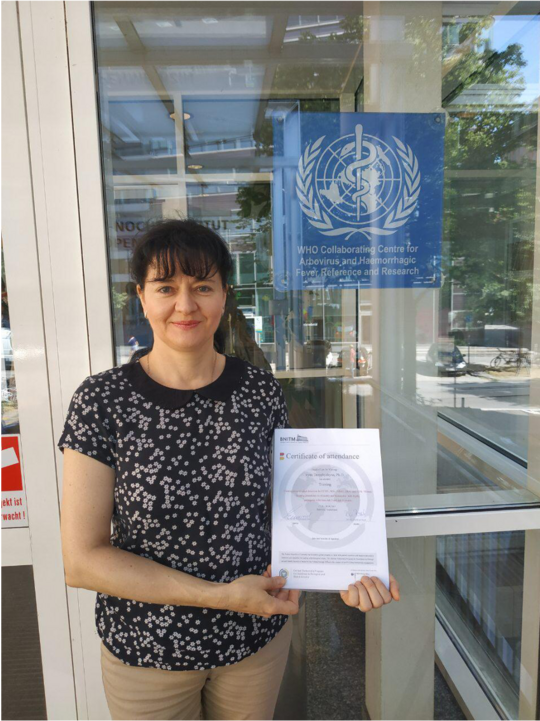
Background
The Federal Foreign Office's biosecurity programme was launched in 2013. The BNITM has been involved from the outset with projects in Kosovo and, since 2016, in Ukraine. All projects were coordinated by the lab group ‘Development of Serological Test Systems’ led by Prof. Dr. Petra Emmerich. The working group led by Dr. Dániel Cadar provided support by implementing metagenomic surveillance strategies. These enable the rapid identification of novel pathogens in the event of a “Disease X” or bioterrorist threats. Over 4,200 tick samples from CCHFV-endemic regions were analysed using next-generation sequencing to detect the occurrence and spread of dangerous viruses at an early stage.
Contact person
Prof. Dr Petra Emmerich
Lab group leader
Phone : +49 40 285380-470
Email : emmerich@bnitm.de
Julia Rauner
Public Relations
Phone : +49 40 285380-264
Email : presse@bnitm.de