


FAQ on Sindbis Viruses
Disclaimer
The contents of this website are for general information purposes only and do not constitute medical advice, diagnosis or treatment. They are not a substitute for individual consultation with a qualified medical professional.
No guarantee is given for the accuracy, completeness or timeliness of the information provided. Use of the content is at your own risk. If you have any health questions or complaints, please always consult a doctor or other qualified professional.
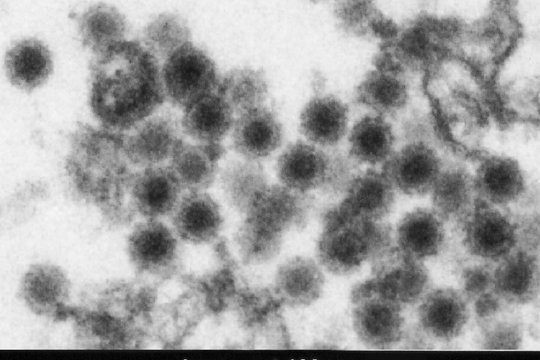
In July 2026, the first human case of a Sindbis virus infection demonstrably acquired in Germany was reported in Baden-Württemberg. This FAQ summarises what is known about the virus, its distribution in Germany, and how to protect against it.
1. What is the Sindbis virus?
The Sindbis virus (SINV) is a mosquito-borne alphavirus belonging to the family Togaviridae, making it a distant relative of the Chikungunya virus. It was first isolated in 1952 from Culex mosquitoes in the village of Sindbis near Cairo (Egypt), after which it was named.
SINV is an enveloped virus with a single-stranded RNA genome. Several geographically distinct genotypes are recognised; genotype I (SINV-I) circulates in Africa and Europe. The viruses detected in Germany are closely related to strains from Scandinavia (Jöst et al. 2010).
The disease is called Sindbis fever. In Northern Europe, it is known by regional names: Ockelbo disease (Sweden), Pogosta disease (Finland), and Karelian fever (Russia).
2. How is the Sindbis virus transmitted?
SINV circulates in a natural transmission cycle between mosquitoes and wild birds. Mosquitoes that preferentially feed on birds (ornithophilic species) acquire the virus when taking a blood meal and transmit it to other birds. In Germany, the main species involved are the common house mosquito Culex pipiens and Culex torrentium. In Sweden and Finland, thrush species such as the fieldfare are considered important amplification hosts.
Humans become infected through the bite of an infected mosquito. They are dead-end hosts: the virus reaches only low and short-lived concentrations in the blood, meaning that mosquitoes cannot acquire and transmit it from humans. Human-to-human transmission has not been described (RKI, Epid Bull 40/2026).
Laboratory experiments at BNITM showed that all seven mosquito species from Germany tested were capable of transmitting SINV – including not only Culex species but also Aedes species such as the Asian tiger mosquito Aedes albopictus (Jansen et al. 2022).
3. Where does the Sindbis virus occur?
SINV is one of the most widely distributed arboviruses: it has been detected in Africa, Europe, Asia, and Australia. However, human cases are reported almost exclusively from Northern Europe.
Finland is the best-known outbreak region. Around 830 cases were reported there between 1981 and 1994, compared with just under 290 in Sweden during the same period. For a long time, major outbreaks in Finland followed an approximately seven-year cycle (1981, 1988, 1995, 2002). In 2021, 566 laboratory-confirmed cases were recorded there, including cases outside the traditionally endemic areas (Suvanto et al. 2022). In Sweden, an outbreak occurred in 2013 in the previously unaffected province of Västerbotten (Gylfe et al. 2018). Viral activity in mosquitoes is concentrated between July and September, peaking in August (Lundström et al. 2019).
In Scandinavia, Culex torrentium and Culex pipiens transmit the virus between birds. Transmission to humans occurs primarily through so-called bridge vectors, such as Aedes cinereus, which bite both birds and humans.
4. Does the Sindbis virus occur in Germany?
Yes. SINV has been known to circulate in Germany since at least 2009, having been detected in mosquitoes and wild birds from the Upper Rhine Plain to Berlin and Brandenburg. So far, the findings have been sporadic; no clinical cases in humans had been reported until 2026.
| Year | Proof | Source |
|---|---|---|
| 2026 | Erste symptomatische, in Deutschland erworbene Infektion beim Menschen (Stuttgart) | RKI 2026 |
| 2019–2021 | SINV-RNA in 21 Mückenproben, u. a. aus Berlin, Brandenburg, Baden-Württemberg, Thüringen und Mecklenburg-Vorpommern | Rau et al. 2023 |
| until 2019 | Antikörper vor allem bei Standvögeln (749 Vogelblutproben); Virus aus einer erkrankten Ringeltaube isoliert; mindestens zwei Virusstämme | Ziegler et al. 2019 |
| 2013–2016 | Drei positive Mückenpools (Culex pipiens, Cx. torrentium) in Halberstadt, Quedlinburg und Berlin | Scheuch et al. 2018 |
| 2014 | Virusisolat aus einer Nebelkrähe aus Berlin publiziert | Eiden et al. 2014 |
| 2011 | 4 von 3.389 Blutspendern (0,1 %) mit SINV-Antikörpern, alle aus dem Raum Weinheim | Jöst et al. 2011 zit. in RKI 2026 |
| 2009 | Erstnachweis: 10 Virusisolate aus Mücken bei Weinheim, überwiegend Culex torrentium; 99,4–99,6 % identisch mit schwedischen Stämmen | Jöst et al. 2010 |
The close genetic relationship with Scandinavian strains suggests that migratory birds brought the virus to Germany.
5. What is known about the first case in Germany?
A 60-year-old man from Stuttgart developed Sindbis fever on 12 July 2026, without having left Baden-Württemberg during the relevant period. This was the first symptomatic, locally acquired (autochthonous) SINV infection in Germany. The case was jointly investigated by the Baden-Württemberg State Health Office, the Stuttgart Public Health Department, the Institute of Tropical Medicine in Tübingen, and BNITM (Wagner-Wiening et al., Epid Bull 40/2026).
- 12 July 2026: Feverishness, skin rash, and severe joint pain.
- Initial suspicion of chikungunya: The man lives in a district where the Asian tiger mosquito is established. However, no antibodies against the Chikungunya virus were detected.
- Further diagnostic testing: Specific IgM and IgG antibodies against SINV, together with seroconversion, confirmed the infection in September 2026.
- Notification and publication: The case was reported as an arbovirus infection under the German Protection against Infection Act (Infektionsschutzgesetz); the RKI published a case report on 1 October 2026.
Whether the tiger mosquito was involved in transmission remains unclear. There is no evidence of a larger outbreak. It is likely that people in Germany have been infected unnoticed in the past as well; the risk to the general population is considered low (ad-hoc-news, 10/2026).
6. What are the symptoms of a Sindbis virus infection?
Many infections are asymptomatic or cause only mild symptoms. Those who develop the disease typically experience three main symptoms: fever, an often itchy skin rash, and joint pain. The incubation period is usually less than seven days (ECDC).
- Acute phase: A maculopapular rash, often itchy, on the trunk and limbs; mild fever; joint pain or inflammation, particularly in the wrists, hips, knees, and ankles; as well as headaches, muscle pain, fatigue, and nausea. Fever and rash usually subside within one to two weeks.
- Long-term effects: Joint symptoms can persist for months or even years and, in rare cases, develop into chronic arthritis. Following the 2013 outbreak in Sweden, 39% of respondents reported joint pain that affected their daily lives six to eight months later (Gylfe et al. 2018).
- Severe cases: Hospitalisations are rare, and neurological complications are exceptional. No deaths have been reported.
In Finland, people aged 30 to 69 are most frequently affected, with women and men equally represented. The clinical presentation resembles chikungunya fever.
7. How is a Sindbis virus infection diagnosed?
Diagnosis is based primarily on the detection of antibodies in the blood. The virus itself is present in the blood only briefly and in low concentrations, so PCR testing plays virtually no role in routine diagnostics (ECDC).
- Antibodies: IgM can usually be detected from around day 8 of illness, and IgG from around day 11. Since IgM remains positive in more than one-third of patients even after six months, only an increase in antibody levels between two blood samples (seroconversion) confirms a recent infection – as in the Stuttgart case.
- Cross-reactivity: Antibodies against related alphaviruses can produce false-positive results. Specialised laboratories therefore confirm findings using neutralisation tests.
- Differential diagnoses: Chikungunya, dengue and Zika virus infections, parvovirus B19, rubella, and measles.
The RKI recommends considering an arbovirus infection in patients presenting with fever, rash, and severe joint pain during mosquito season, even in the absence of travel history. If dengue and chikungunya tests are negative, testing for SINV should also be considered (RKI 2026). Detection of an acute infection is subject to mandatory notification under Section 7 (1) No. 50a of the German Protection against Infection Act (IfSG) ("other arboviruses") (IfSG Section 7).
8. How is Sindbis fever treated?
There is no specific antiviral treatment; therapy focuses on relieving symptoms. Antihistamines can help with the itchy rash, while painkillers and anti-inflammatory drugs are used to treat joint pain. In cases of persistent joint symptoms, corticosteroids are sometimes injected directly into the affected joint, although the evidence supporting this approach is limited (ECDC).
9. Is there a vaccine against the Sindbis virus?
No. Neither a vaccine nor preventive medication is available for humans or animals.
10. Can the Sindbis virus be transmitted through blood donations?
Transmission through blood or blood products has not been documented to date, but cannot be ruled out. Viraemia is shorter and less pronounced than with the Chikungunya virus, so the risk is considered likely to be low (ECDC). Antibody findings in 4 out of 3,389 blood donors from the Weinheim area demonstrate that people in Germany may become infected without noticing it (RKI 2026).
11. How can you protect yourself against the Sindbis virus?
The only way to protect yourself is to avoid mosquito bites – especially from July to September, when viral activity is at its highest.
- Use insect repellents containing DEET or icaridin on exposed skin.
- Wear long, light-coloured clothing, particularly at dusk and in the evening, when Culex mosquitoes are active; the tiger mosquito also bites during the day.
- Install insect screens on windows and doors and, if necessary, sleep under a mosquito net.
- Eliminate potential breeding sites around your home: cover rainwater barrels and empty plant saucers, buckets, and bird baths every week.
12. What role does climate change play?
Unlike the West Nile virus, SINV transmission is hardly dependent on high temperatures: native mosquito species were already able to transmit the virus in laboratory experiments at an average temperature of 18 °C (Jansen et al. 2022). This helps explain why outbreaks occur even in the cool climate of Northern Europe.
Nevertheless, warmer and longer summers may extend the mosquito season and increase vector populations. In addition, new vector species such as the Asian tiger mosquito are spreading; laboratory experiments have also shown that this species can transmit SINV. In 2021, the virus was detected in new regions of Finland (Suvanto et al. 2022).
13. What research is BNITM conducting on the Sindbis virus?
The Department of Arbovirology and Entomology at BNITM, a WHO Collaborating Centre for Arboviruses and Haemorrhagic Fever Viruses, has been investigating SINV since its first detection in Germany.
- Distribution and ecology: SINV was first detected in mosquitoes from Germany in 2009 (Jöst et al. 2010); antibody studies in blood donors and patients followed (Jöst et al. 2011, J Clin Virol 52:278–279).
- Vector competence: Investigating which native and invasive mosquito species can transmit SINV and how temperature affects transmission (Jansen et al. 2022).
- Diagnostics: Specialised arbovirus diagnostics, including neutralisation tests; BNITM was involved in investigating the first human case in 2026.
Sources
- Wagner-Wiening C, … Schmidt-Chanasit J, … Brockmann S. Erstnachweis einer symptomatischen autochthonen humanen Sindbis-Virus-Infektion in Deutschland, Baden-Württemberg. Epid Bull 2026;40.
- Jöst H et al. Isolation and phylogenetic analysis of Sindbis viruses from mosquitoes in Germany. J Clin Microbiol 2010;48:1900–1903.
- Eiden M et al. Isolation of Sindbis virus from a hooded crow in Germany. Vector Borne Zoonotic Dis 2014.
- Scheuch DE et al. Detection of Usutu, Sindbis, and Batai viruses in mosquitoes collected in Germany, 2011–2016. Viruses 2018;10:389.
- Ziegler U et al. Sindbis virus – a wild bird associated zoonotic arbovirus circulates in Germany. Vet Microbiol 2019;239:108453.
- Jansen S et al. Vector competence of mosquitoes from Germany for Sindbis virus. Viruses 2022;14:2644.
- Rau J et al. Viral RNA in mosquitoes collected between 2019 and 2021 in Germany. Viruses 2023;15:2298.
- Lundström JO et al. Sindbis virus polyarthritis outbreak signalled by virus prevalence in the mosquito vectors. PLoS Negl Trop Dis 2019.
- Gylfe Å et al. Mosquitoborne Sindbis virus infection and long-term illness. Emerg Infect Dis 2018;24(6).
- Suvanto MT et al. Sindbis virus outbreak and evidence for geographical expansion in Finland, 2021. Euro Surveill 2022;27(31).
- ECDC. Facts about Sindbis fever.
- Deutsches Ärzteblatt. Erster Nachweis von Sindbis-Fieber in Deutschland, 1. Oktober 2026.
- ad-hoc-news. Sindbis-Virus in Deutschland: Gelenkschmerzen können monatelang anhalten, Oktober 2026.
- § 7 Infektionsschutzgesetz.
- Vorlage: BNITM. FAQ zum West-Nil-Virus.
Contact
- Prof. Dr Jonas Schmidt-Chanasit
- Head of Arbovirology/ Entomology Department
- phone: +49 171 212 7900, +49 40 285380 271
- email: schmidt-chanasit@bnitm.de
- BNITM Press
- phone: +49 40 285380-264/269
- email: presse@bnitm.de