


Book a Scientist: Have questions? Talk to the people who actually do the research.
Digital conversations on 29.09.2026
“Book a Scientist” gives you the chance to spend 25 minutes online with an expert from the Leibniz Association – and to ask everything you’ve always wanted to know about your favourite topic.
What BNITM offers
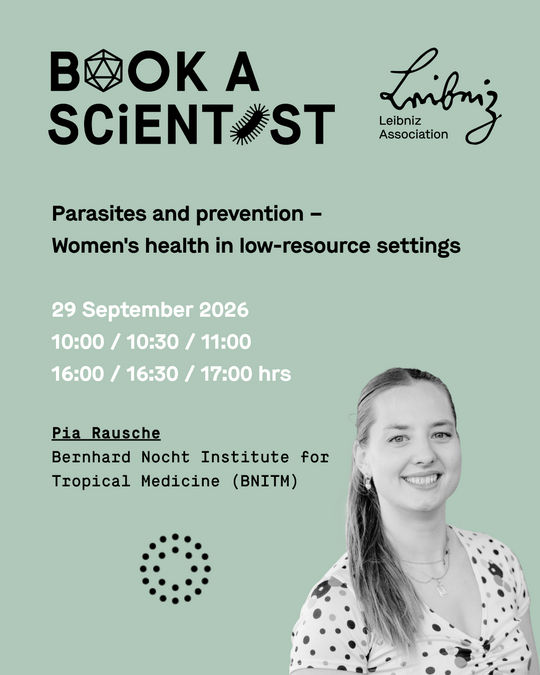
How to access care when the next hospital is hours away? Our work investigates holistic approaches to prevention, diagnosis and care to define needs for interventions by applying epidemiological and sociological methods with focus on parasitic conditions and cervical cancer prevention. Rather than viewing individual diseases separately, we investigate how existing services can be utilized to improve women's health in low-resource areas.
Language: German / English
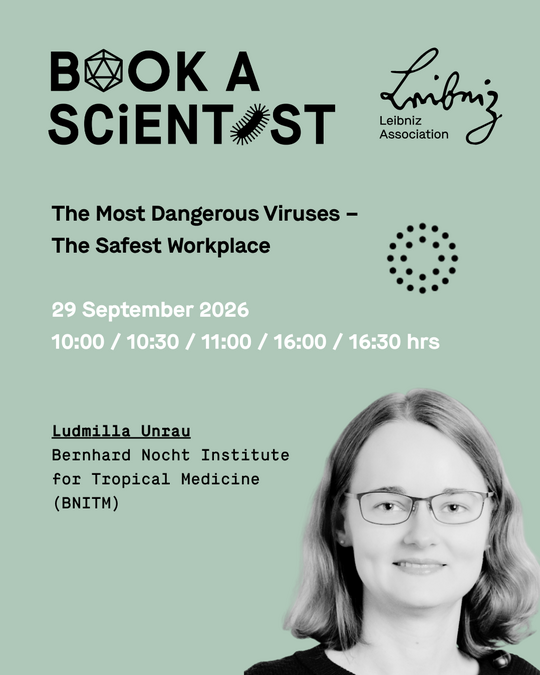
How dangerous is working with highly infectious viruses? If you ask me, it’s no more dangerous than other laboratory work. I’d be happy to talk about my day-to-day life in and around the high-security laboratory, and the measures we take to protect ourselves whilst working – from authorisation to protective suits. For me, it’s one of the safest workplaces you can imagine.
Language: German / English
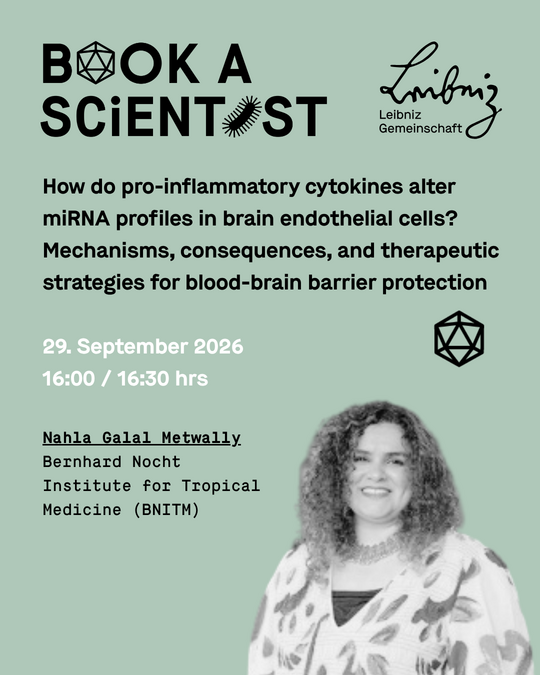
The blood-brain barrier (BBB) is crucial for brain health. During neuroinflammation and infection, cytokines like TNF-α and IFN-γ change miRNA expression in brain endothelial cells. These changes disrupt tight junctions, increase immune cell migration, and activate inflammation, leading to BBB dysfunction. Understanding these miRNA pathways could help develop treatments to protect the BBB, as seen in studies on cerebral malaria.
Language: English
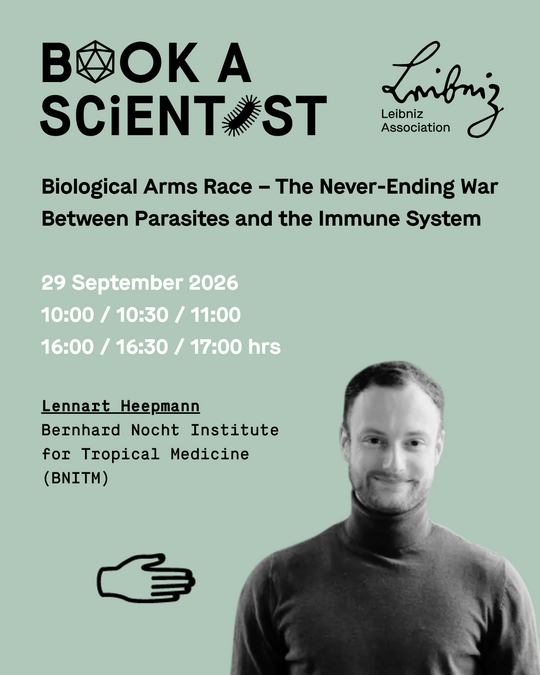
Parasitic worms cause infections worldwide and use sophisticated defence mechanisms to outwit the immune system. Yet the body fights back, mobilising targeted defences in the battle against the parasites. Discover, through the latest research findings, how immune cells are regulated and how this conflict, which dates back millions of years, shapes modern medicine.
Language: German / English
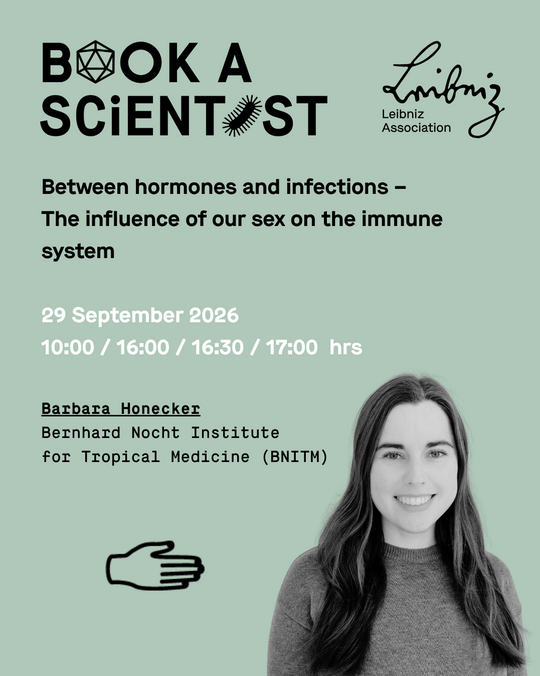
Why do many diseases occur with differing frequencies and severities in men and women? The answer lies in part in our hormones and chromosomes, which influence our immune response. We are investigating how sex hormones regulate the innate immune system and which mechanisms of the immune response lead to different manifestations of parasitic infectious diseases such as leishmaniasis and amoebiasis.
Language: German / English
Key facts
Contact person
Dr Anna Hein
Public Relations
Phone : +49 40 285380-269
Email : presse@bnitm.de
Julia Rauner
Public Relations
Phone : +49 40 285380-264
Email : presse@bnitm.de
Further information