


2026 - Yasmin's ATG18 paper published in PLoS Pathogens
In our latest paper, we uncover a link between an ancient autophagy factor, endocytic membrane dynamics, and artemisinin sensitivity in malaria parasites.
Abstract
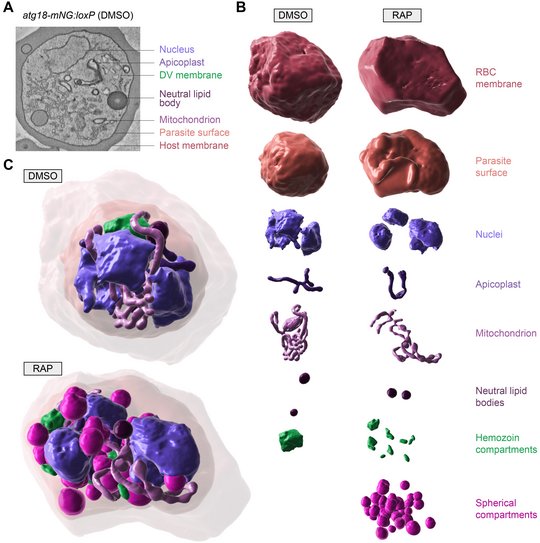
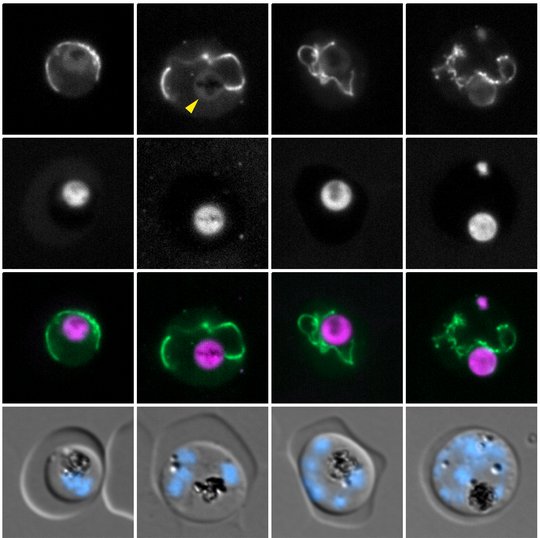
Malaria parasites replicate inside red blood cells, degrading hemoglobin within a specialized digestive vacuole. Efficient hemoglobin processing is essential for parasite survival and influences antimalarial drug susceptibility. The vacuole constantly fuses with incoming hemoglobin-filled vesicles, yet the mechanisms that balance cargo influx with membrane homeostasis remain unclear. Here, using conditional reverse genetics, quantitative live-cell imaging, and 3D electron microscopy, we characterize the autophagy-related protein 18 of Plasmodium falciparum (PfATG18) as a key regulator of vacuolar membrane dynamics. Loss of PfATG18 caused vacuole fragmentation, accumulation of hemoglobin-filled vesicles, and parasite death. These defects were preceded by broad architectural destabilization of the parasite's V-ATPase, a proton pump controlling organelle acidification and the vacuole's fusion-fission equilibrium. Direct interference with its membrane sector phenocopied PfATG18 deficiency. We found that PfATG18 does not interact directly with the proton pump but instead associates with a putative V-ATPase assembly factor and with complexes regulating phosphoinositide balance and vesicle trafficking. The breadth of these interactions indicates a multifaceted role at the vacuolar membrane and a regulatory influence on V-ATPase mediated through associated protein machinery. Although a point mutation in PfATG18 has been linked to artemisinin resistance, its complete knockout did not decrease sensitivity. Instead, it rendered ring-stage parasites hypersensitive to dihydroartemisinin, while leaving their susceptibility to other antimalarial drugs unchanged. Together, these findings establish PfATG18 as a central regulator of endocytic membrane homeostasis, essential for V-ATPase function and asexual parasite proliferation in the human blood.
2026 - Louis' paper on HDP published in Nature Communications
Our newest paper puts an established model of hemozoin formation to the test – and reveals something unexpected.
Abstract
Malaria blood-stage parasites digest ~80% of host cell hemoglobin within a degradative vacuole, releasing heme that is detoxified by sequestration into hemozoin crystals. Although essential for survival and a validated drug target, the mechanisms of heme biomineralization remain unclear. Here, we study the parasite’s Heme Detoxification Protein (HDP), previously proposed to mediate hemozoin formation, using genetic, microscopic, bioenergetic, and proteomic approaches. Endogenous tagging reveals that HDP localizes to the mitochondrion, not the digestive vacuole. HDP inactivation has no effect on heme biomineralization, but causes mitochondrial depolarization, proguanil hypersensitivity, and developmental arrest, which is rescued by bypassing respiratory-chain-dependent pyrimidine biosynthesis. HDP knockout abolishes mitochondrial electron flow due to loss of complexes III and IV, consistent with impaired mitochondrial protein synthesis. Integration of structural modelling with quantitative proteomics places HDP within the mitoribosomal large subunit. Here, we show that HDP is essential for mitochondrial function and does not contribute to hemozoin formation.
2023 - New paper on Plasmodium V-ATPase published in PNAS
Check out our newest paper, where we explore the functions of the Plasmodium V-ATPase complex in vacuolar physiology and antimalarial drug uptake. With a published commentary from Akhil Vaidya!
Significance
Malaria is caused by Plasmodium parasites, which replicate within human erythrocytes. During intraerythrocytic growth, the parasite takes up and digests host cell hemoglobin in an acidified vacuole. Several antimalarials interfere with biochemical pathways in this vacuole leading to parasite death. It was long believed that accumulation of these drugs is a mere function of the pH gradient between parasite cytosol and the vacuolar lumen. By targeting the multimeric proton pump powering this gradient, we identify distinct functions of this protein complex in physiology and maintenance of the digestive vacuole. Contrary to current belief, we find that severe dissipation of the proton gradient has only limited impact on antimalarial drug uptake and no effect on drug susceptibility.
Abstract
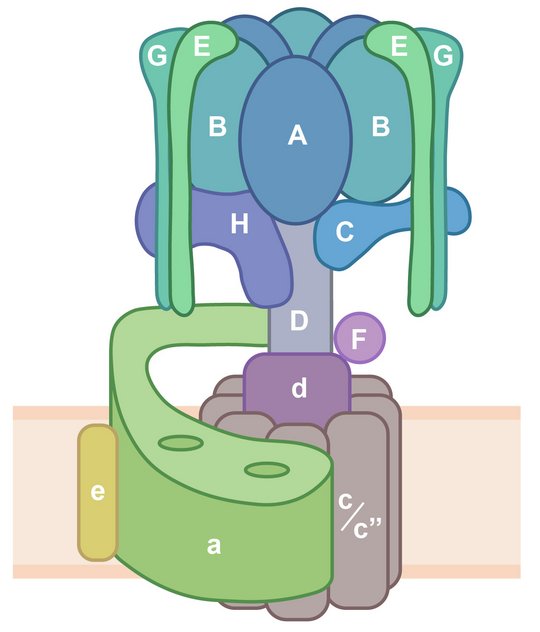
To ensure their survival in the human bloodstream, malaria parasites degrade up to 80% of the host erythrocyte hemoglobin in an acidified digestive vacuole. Here, we combine conditional reverse genetics and quantitative imaging approaches to demonstrate that the human malaria pathogen Plasmodium falciparum employs a heteromultimeric V-ATPase complex to acidify the digestive vacuole matrix, which is essential for intravacuolar hemoglobin release, heme detoxification, and parasite survival. We reveal an additional function of the membrane-embedded V-ATPase subunits in regulating morphogenesis of the digestive vacuole independent of proton translocation. We further show that intravacuolar accumulation of antimalarial chemotherapeutics is surprisingly resilient to severe deacidification of the vacuole and that modulation of V-ATPase activity does not affect parasite sensitivity toward these drugs.

![[Translate to English:] Logo Bundesministerium fuer Bildung und Forschung](/fileadmin/media/Allgemeines_und_Platzhalter/Logo/BMFTR_de_Web_RGB_gef_durch_01.png "Logo BMFTR")
![[Translate to English:] Logo DFG: Zu sehen ist der Schriftzu DFG in dicker blauer Schrift.](/fileadmin/media/Allgemeines_und_Platzhalter/Logo/Logo_DFG.png "[Translate to English:]")
![[Translate to English:] Logo Jürgen Manchot Stiftung](/fileadmin/media/Allgemeines_und_Platzhalter/Logo/Logo_Juergen_Manchot_Stiftung.png "[Translate to English:]")