


Explaining Disease
How Do Infections Make People Sick?
Unraveling Biological Processes During Infection
Why do some people stay symptom-free during infections while others face life-threatening complications? How is it that some people experience long-term effects after infections (e.g. post-COVID) or have an increased risk of reinfection (post-malaria)? The reasons behind these very different outcomes are often unknown.
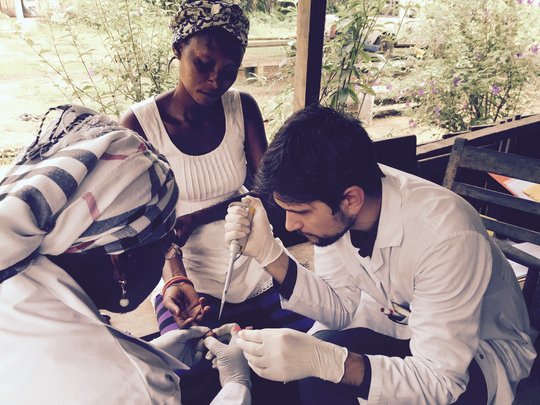
Using state-of-the-art technologies in clinical infectiology, immunology, and molecular and cellular biology, we investigate how pathogens interact with the human body at every level - from single cells to whole organ systems. To understand these complex processes under conditions that closely mimic real world infections, we combine experimental data with modern modelling techniques, bioinformatics, and systems biology to get a comprehensive picture of how disease unfolds.
We analyse immune responses in human studies and, where appropriate, in experimental models, including multi-organ-on-a-chip systems with integrated immune compartments. We concentrate on understanding how infections – especially emerging ones, which are often poorly understood – disrupt the delicate balance of cell and organ functions, with the aim of enabling the development of more effective interventions.
While much of our work investigates the pathophysiology of severe illness, we also study the mechanisms by which protective immune responses develop - or fail to develop - during natural infections and following vaccination. In many tropical diseases, both naturally acquired and vaccine-induced immunity tend to emerge slowly and incompletely. Understanding the underlying causes of this phenomenon is essential for the strategic improvement of vaccine strategies.
By integrating this data through systems biology, we uncover how infections unfold and how the body responds. Using innovative experimental techniques - from precision genome editing to next-generation infection models like organoids - we explore infection processes in ways that connect molecular insights to real clinical outcomes. By identifying critical turning points, we aim to develop targeted strategies that can intercept disease pathology and poor vaccine immunity.
Contact
- Dr Anneke Novak-Funk
- Head of Science Management
- phone: +49 40 285380-266
- email: novak-funk@bnitm.de
Downloads
- Scientific report 2023-2024 ( PDF 9 MB )
- BNITM Flyer ( PDF 5 MB )
- Organization Chart BNITM ( PDF 2 MB )
- BNITM Strategy 2025 ( PDF 22 MB )